

What we measure
One sensing platform, applied across the sealed systems that decide a mission. Fill and slosh in tanks, combustion inside chambers, and flow through feed lines, all read from the outside.
One platform, many geometries
The platform separates hardware, sensor heads and data, so customers integrate without rebuilding. One shared core reads every geometry, from spacecraft tanks to feed lines to combustion chambers.
Spacecraft tanksFill, slosh and gauging
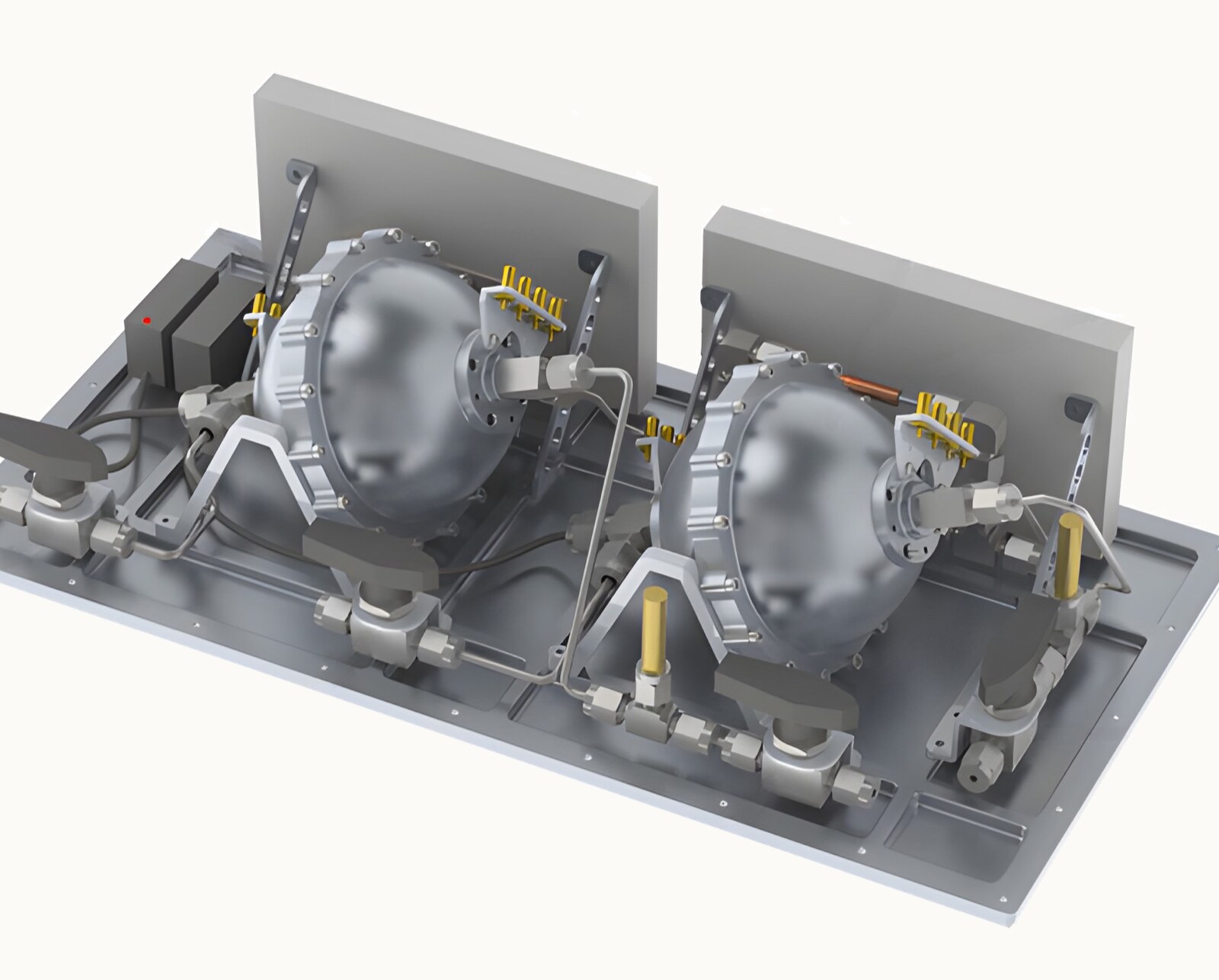
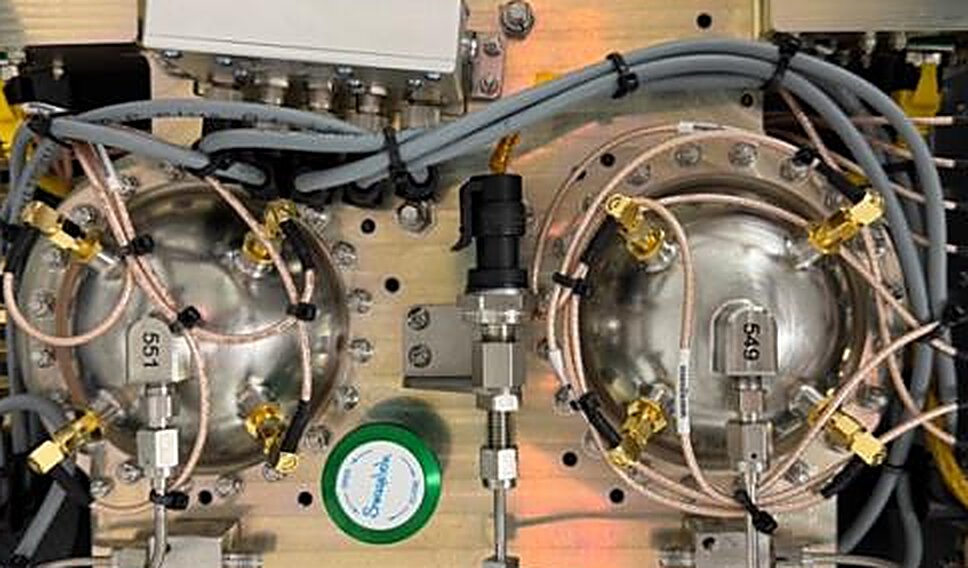
Propellant mass, phase boundaries and slosh in sealed spacecraft tanks, resolved in any gravity. Remaining propellant decides a satellite’s working life; reading it keeps hardware in service longer.
Feed systemsFlow, entrainment and phase
Flow behaviour, gas entrainment and phase in propellant feed lines, read through the pipe wall.
Combustion chambersImaging and acceptance
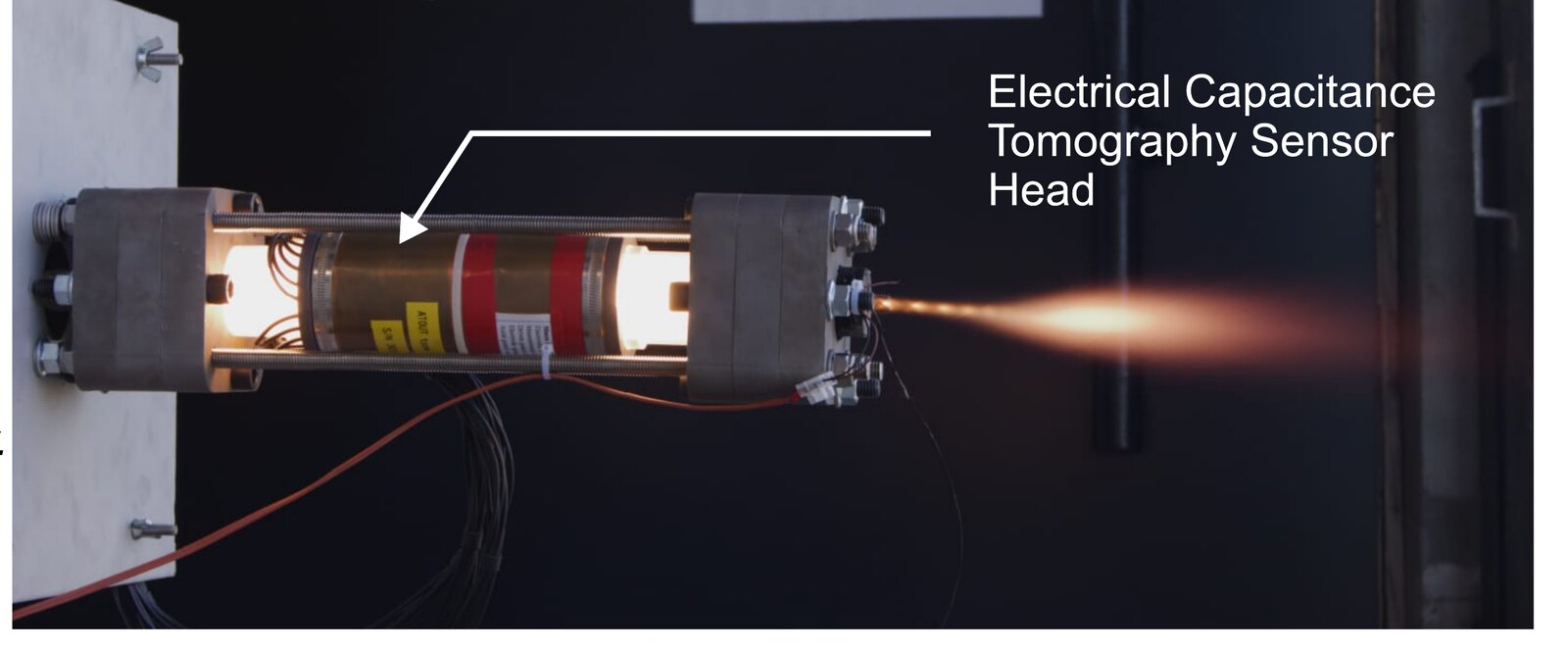
Internal combustion imaging over a full firing, from ignition to flameout, for propulsion test and acceptance programmes.
Core hardware
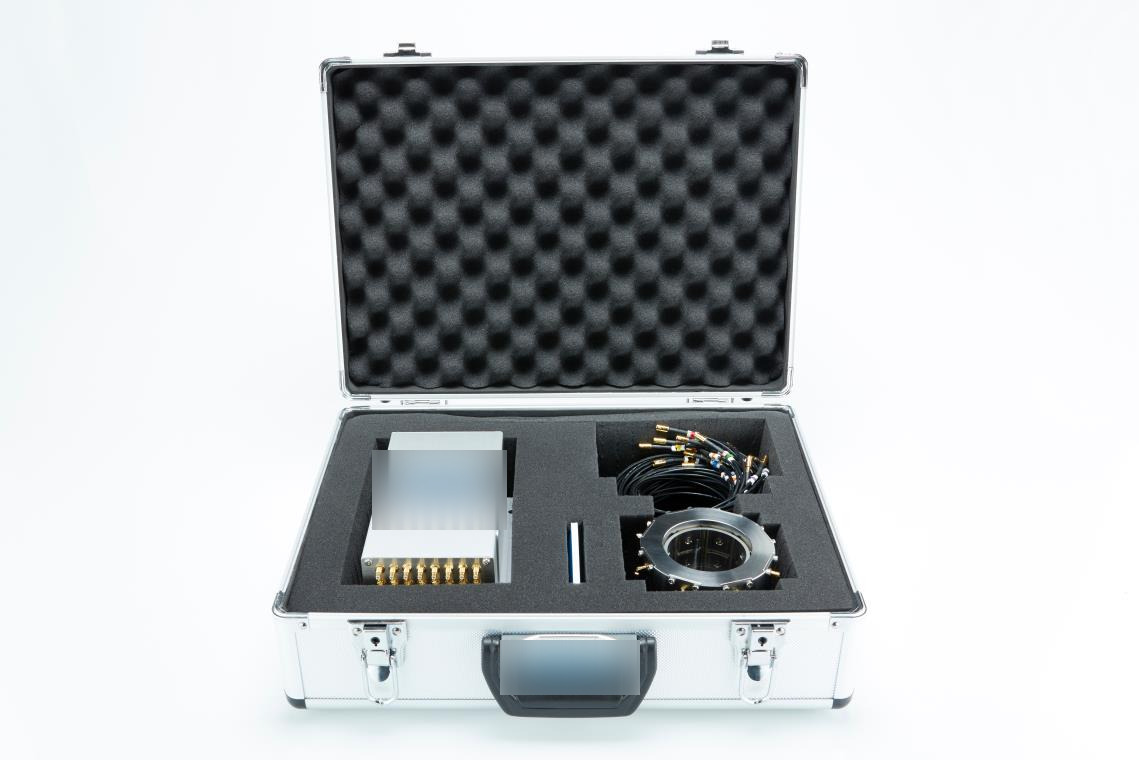
One shared electronics core drives every sensor head, so a new geometry needs only a new sensor head.
Data layerReconstruction and outputs
The measured field solved into the interior and returned as live numbers and images.
Adjacent markets like liquefied gases and hydrogen are later-stage optionality, not near-term products.
The hardware behind the product lines
Real hardware from the heritage programme and founder research that Evandor’s Vira lines build on. Electrode arrays sit around each vessel and read the interior through the wall.
Measurement accuracy
The first three figures come from the published ECT record and describe the measurement class, not a qualified Evandor product; they are also definition-sensitive. The final row sets them against the gauging methods flying today.
Figures are attributed to their source programmes. Spaceflight work may be export-controlled.
Tell us what you need to measure
Tell us the vessel and the measurement; we will say what the sensing resolves today.
[email protected]